Advice from a Colorado attorney done differently…
Most people don’t hire a lawyer often, if at all. When they do, the experience can feel frustrating—not necessarily because of the legal outcome, but because of how the process feels along the way.
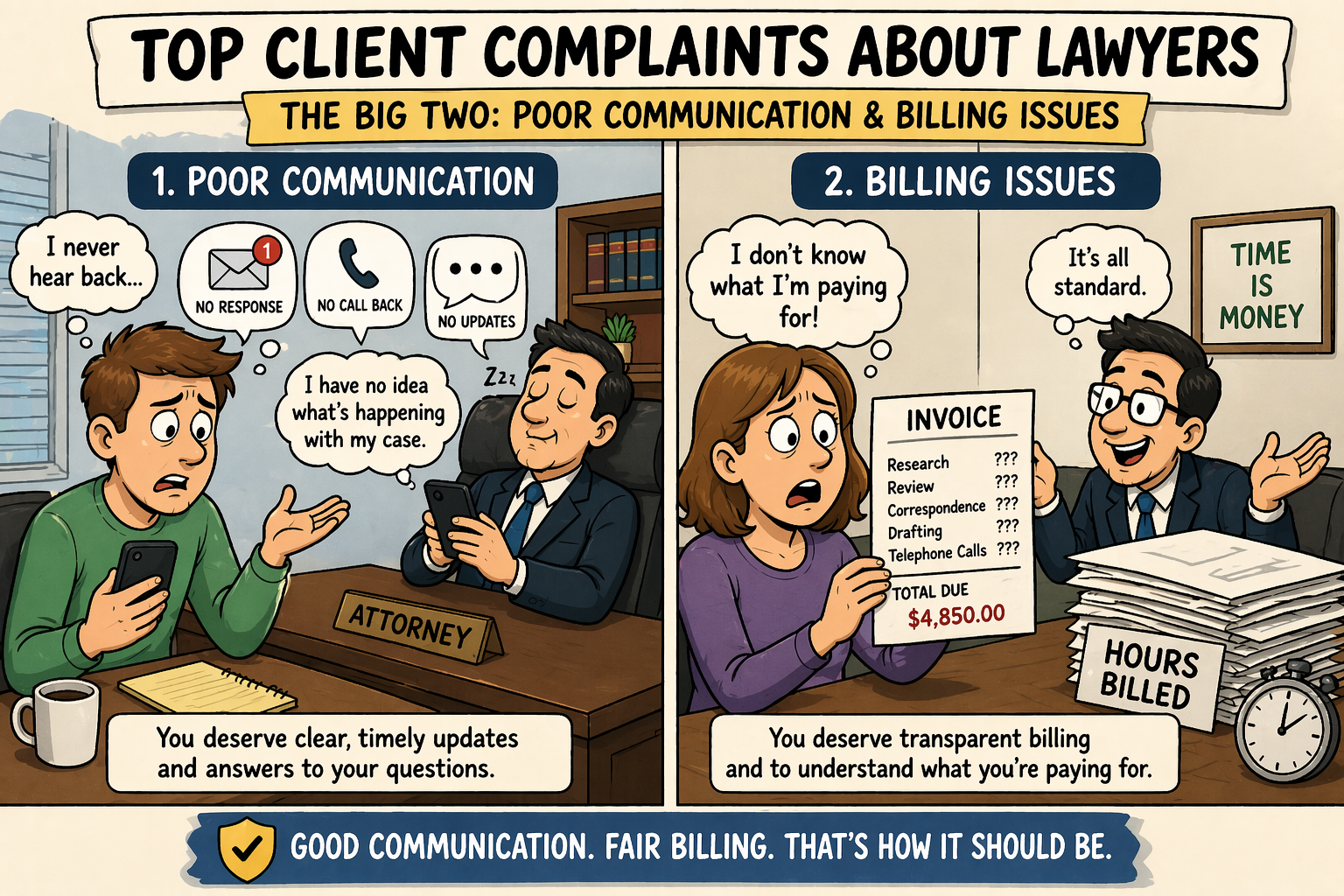
In Colorado, the attorney discipline system doesn’t track “top complaints” in a neat list. Instead, it focuses on whether a lawyer has violated the Rules of Professional Conduct. But if you look at those rules—and the systems built around them—you can see a pattern. The same issues come up again and again: communication and billing.
The first is communication. Colorado lawyers are required to promptly inform the client of important matters, keep clients reasonably informed, and promptly respond to client questions. (Colo. RPC 1.4) That rule exists for a reason. Too often, clients feel left in the dark, unsure what’s happening in their case or why they are being charged for things they didn’t discuss with their attorney. I have seen some clients call several times over the course of weeks before their attorney finally returns their call.
The second is billing. Clients want to understand what they are paying for, and they want those charges to feel fair and transparent. Although lawyers may not charge their clients “unreasonable” fees, what constitutes “unreasonable” is subject to debate. (Colo. RPC 1.5) The Colorado Bar Association maintains a Legal Fee Arbitration Committee specifically to resolve disputes between lawyers and clients over fees. The existence of that free program says a lot.
These aren’t abstract issues—they can have an enduring effect on a client and his or her family, both financially and emotionally. And they are also avoidable.
My approach is simple: clear, ample communication and straightforward billing.
As a solo practitioner, I don’t have secretaries or paralegals to hide behind; if you call me, I answer the phone. For my clients, I promise to return calls within 48 hours (even on weekends!). I believe that my clients deserve this level of hands-on service.
I also approach billing differently than many lawyers do. Most legal services are either billed hourly or on a contingent basis. The problem with hourly billing is that it incentivizes lawyers to take as much time as possible to complete a task, rather than completing it efficiently. In contrast, most of my billing is done on a flat-rate basis. This way, you know up front what my charges are and what you are getting. No surprises.
Legal work may be complex, but your relationship with your lawyer shouldn’t be.
